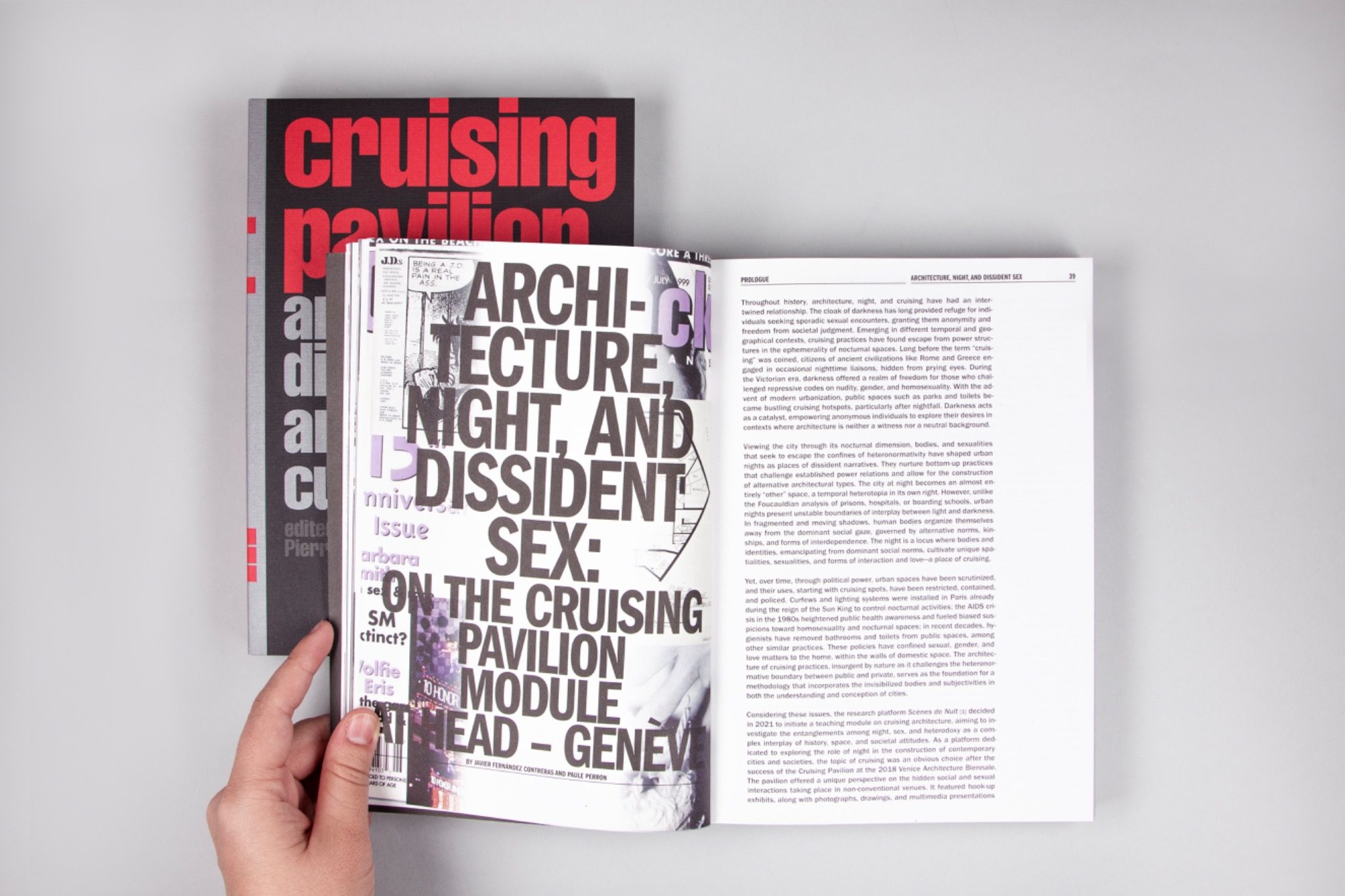
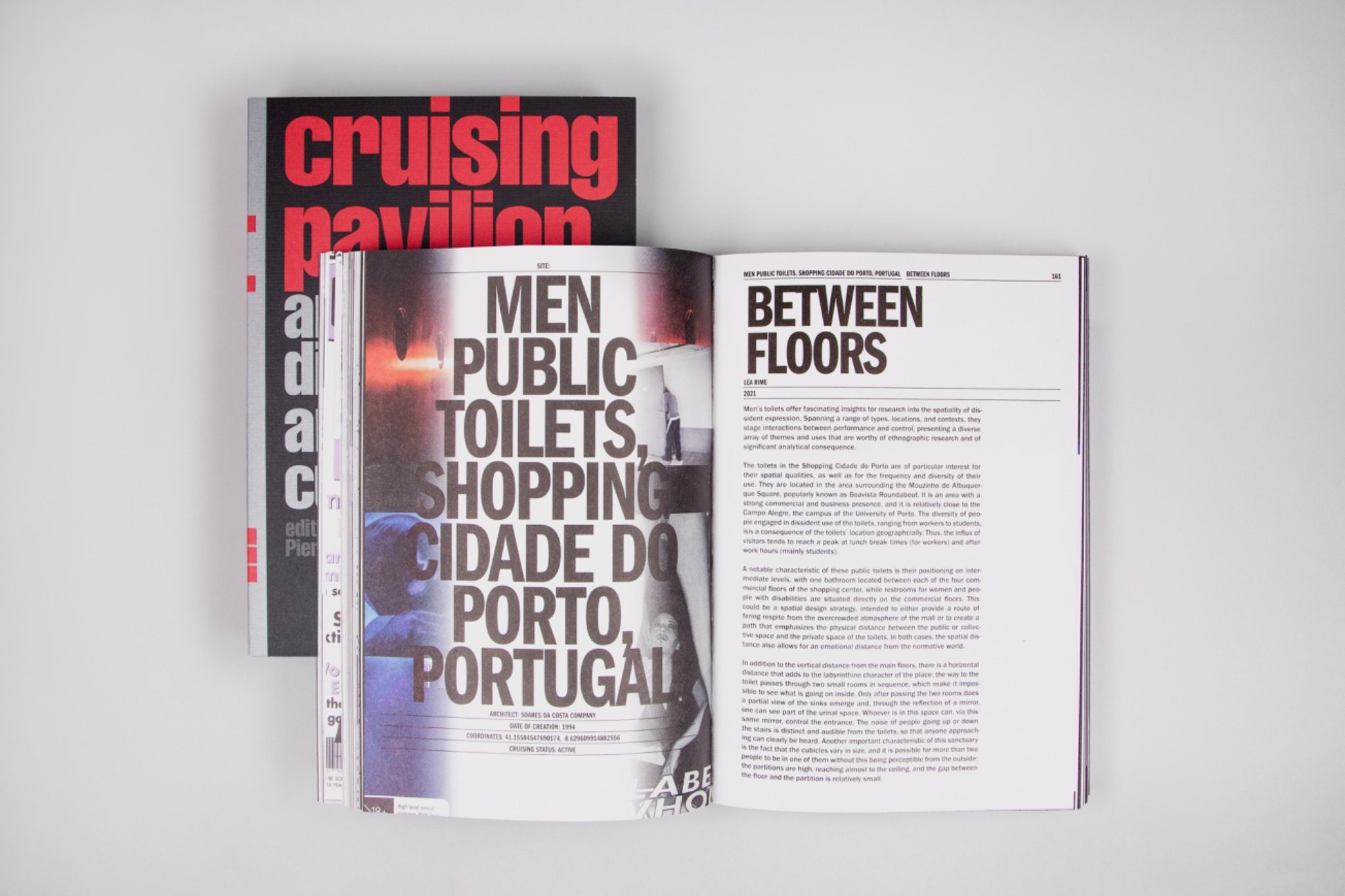
On the Cruising Pavilion module at HEAD – Genève.
Javier F. Contreras and Paule Perron, in Cruising Pavilion: Architecture, Dissident Sex and Cruising Cultures, edited by Pierre-Alexandre Mateos and Charles Teyssou (Leipzig: Spector Books, 2026), 38–43.
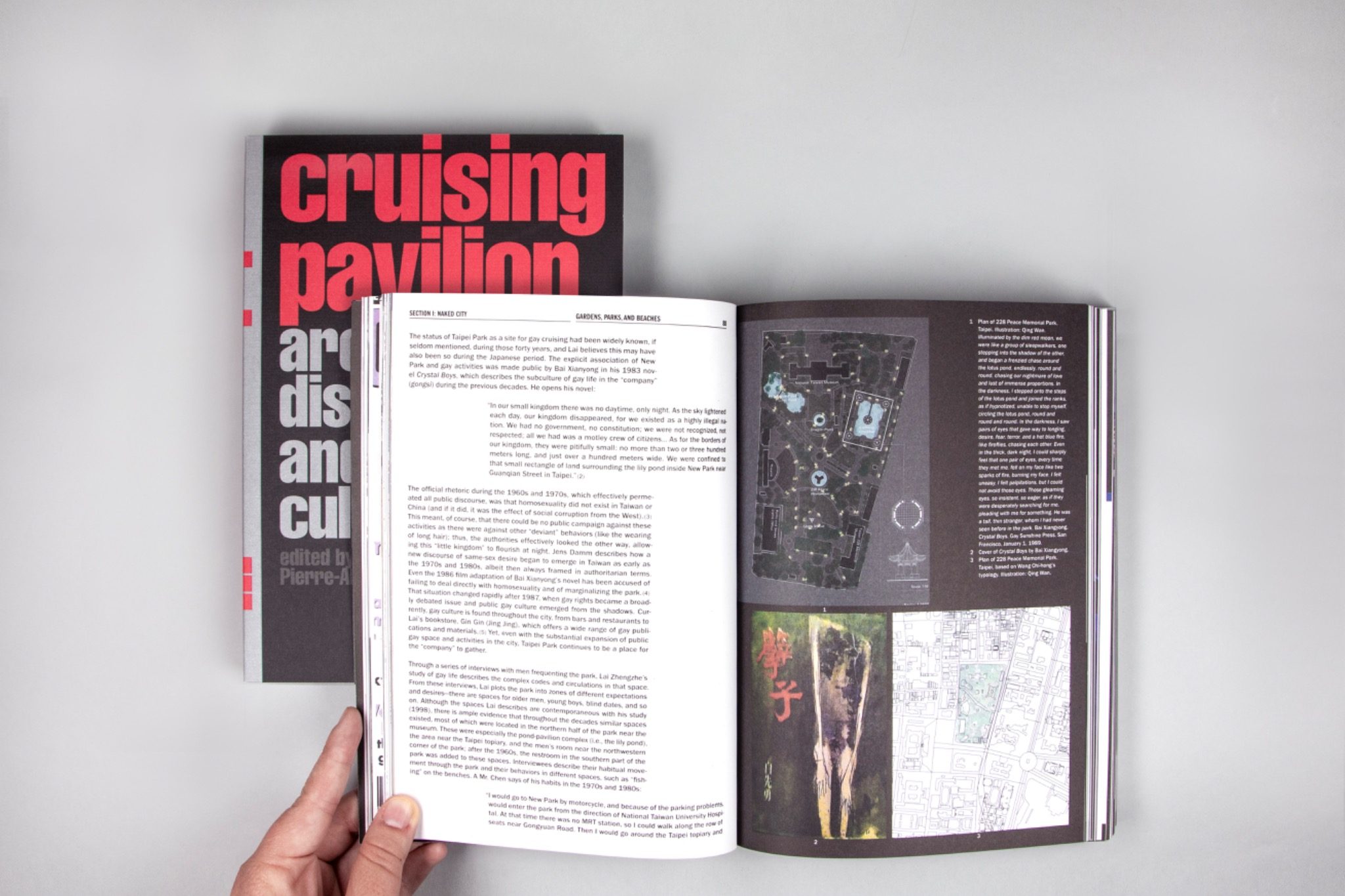
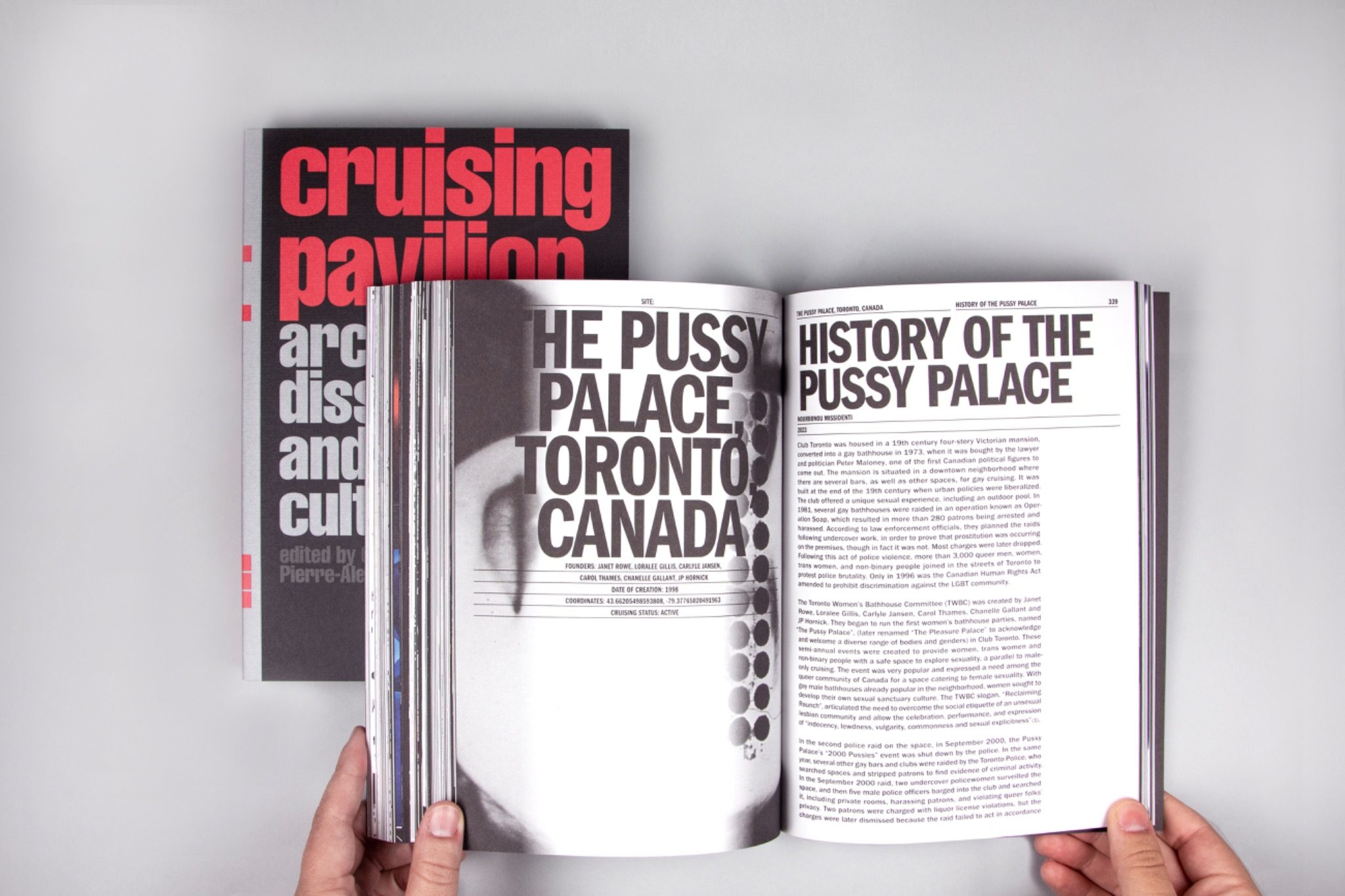
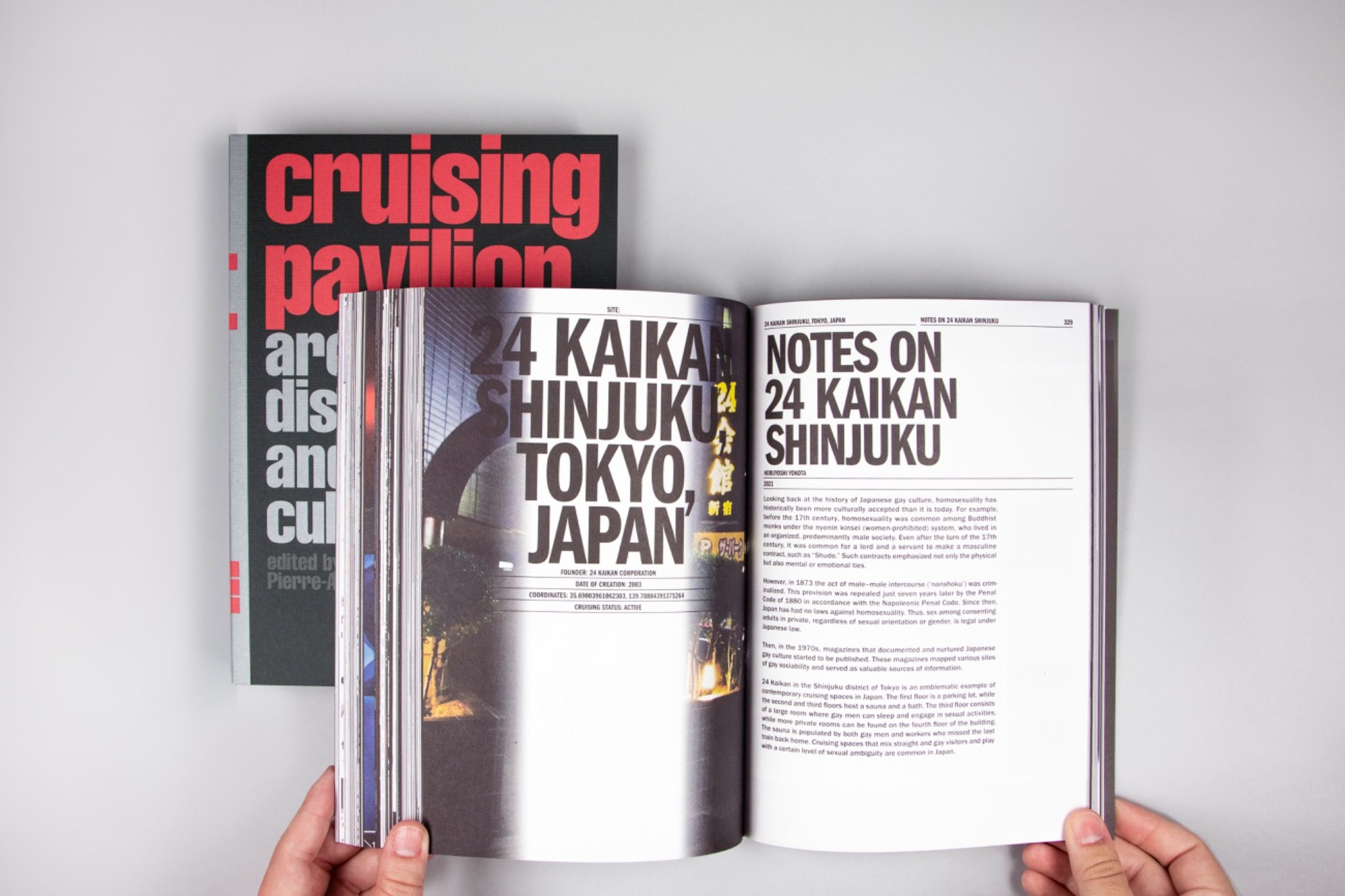
This essay explores the historical relationship between architecture, night and cruising as spatial practices through which dissident sexualities have disrupted regimes of control and heteronormative urban order. Conceived as ephemeral heterotopias, nocturnal cruising spaces (parks, toilets, bathhouses, clubs, cinemas and other appropriated or purpose-built environments) constitute counter-spatial formations in which human bodies produce alternative modalities of kinship, intimacy and collective desire beyond the disciplinary logics of domesticity and public decorum. Centering on the Cruising Pavilion module developed with MAIA students at HEAD – Genève in 2021, the essay examines examples ranging from parks in Taipei and shopping centers in Porto to queer clubs in New York and bathhouses in Tokyo. The students’ case studies reveal cruising as a critical lens through which to interrogate contemporary relationships between sexuality, technology, agency and urban governance, while advancing architectural imaginaries capable of reconfiguring public space at night.
With contributions by MAIA students: Nourbonou Missidenti, Patrycja Pawlik, Camila Perna, Léa Rime, Patris Sallaku, Qing Wan, Nobuyoshi Yokota
Download Essay. PDF (English)
© HEAD – Genève, Alexandra Miskufova